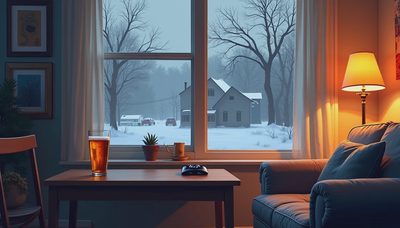
The house finally goes quiet around 9:15 on a good night.
Owen is down. Lucy is down. The dishwasher is running. Megan is reading or already half-asleep on the couch. I have a window that is almost never longer than ninety minutes and sometimes shorter if someone has a bad dream or the dog decides 10 p.m. is walk time.
Those ninety minutes are not flexible. They do not stretch because a game has a great narrative arc or a deep progression system. They end when they end. So the only games that survive in this slot are the ones that can start late, deliver something real, and let me put the controller down without the feeling that I just got short-changed.
I have a short, unforgiving list of what that actually requires.
First, the game has to respect a hard stop. No “one more mission” that turns into forty-five minutes. No extraction timer that punishes you for logging off. No stamina system or daily lock that makes a short session feel incomplete. If I have to choose between finishing the activity and going to bed on time, the game has already failed the test.
Second, the first fifteen minutes of any session need to feel like play, not recovery. I do not have the attention budget to re-learn controls, clear a backlog of menus, or watch a recap of where I left off three nights ago. The game should meet me where I am—mid-build, mid-map, mid-fight—and let me continue without friction.
Third, the session has to produce a clean sense of progress or pleasure that is not dependent on a longer runway. A single strong combat encounter. A clean race. A short co-op round with Owen on the weekend that still works when I play solo at night. A building session in a sandbox that leaves the world better than I found it. Something I can point to when I turn the TV off and think, “that was worth it.”
Games that clear this bar for me tend to share a few traits. They have low system overhead once you’re past the initial learning curve. They allow meaningful progress in small increments. They do not punish interruption. And they still feel good in the hands even when my brain is already tired from a full workday and the residual noise of parenting.
Some nights that means a focused hour of a well-tuned action game that lets me drop in, fight, and drop out. Some nights it means a quieter strategy or management game that I can pause without consequence. Some nights it is a short co-op title I can also share with Owen on the weekend so the library stays dual-purpose. The common thread is never genre. It is respect for the clock.
The games that fail this test are often the ones the wider internet is currently excited about. The ones with rich systems that assume you will settle in for a three-hour block. The ones that front-load friction or save their best loops for later. The ones that treat every log-out as a lost engagement opportunity. I do not resent those games for existing. I simply cannot afford them in the only open slot I have left.
When I write about “games for tired brains” or “what still works after 9 p.m.,” this is the filter. Not “is it good?” but “can it deliver a complete, non-robbery experience inside a hard ninety-minute window that may end with no warning?”
Most games are not designed for that constraint. The ones that are become disproportionately valuable. They turn a narrow slice of the day into something that still feels like leisure instead of another obligation I have to manage.
I do not need a game to fill an entire evening. I need it to make the evening I actually have feel like it belonged to me.
A game doesn’t need to be perfect. It needs to earn the hours—especially the short ones that come after the kids are asleep.

No notes yet — write the first.