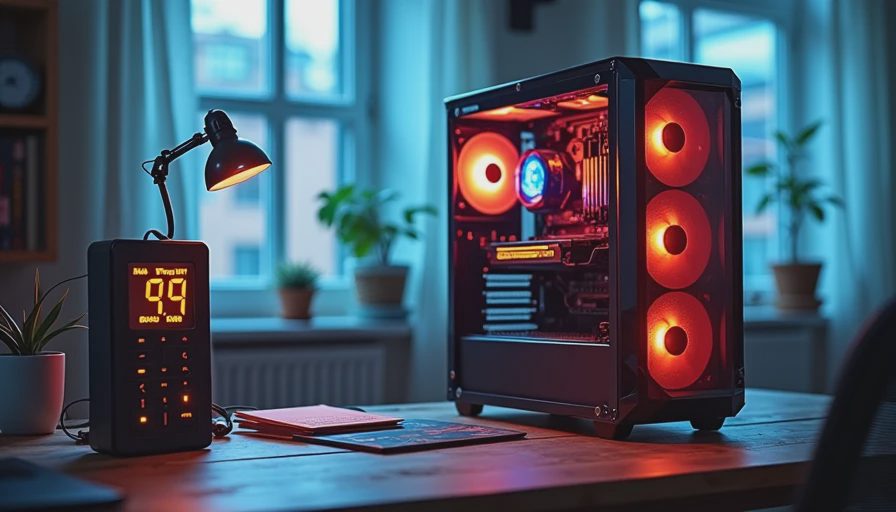
I don’t care how pretty a game looks in a 4K trailer running on hardware I’ll never own.
I care whether it stays stable on the machine I actually paid for, in the room where the electric bill shows up every month, during the ninety minutes I have after the kids are asleep.
That is the entire performance standard this site uses.
Most reviews still treat frame rate like a flex. They list average FPS at ultra settings on a flagship card, note that it “looks stunning,” and move on. Useful if your hobby is benchmarking. Less useful if your hobby is playing games without the fan noise waking the house or the frame times turning combat into a slideshow the moment three particle effects stack.
I’m paying for the electricity. I’m the one who has to live with the heat, the noise, and the stutter. So my rules are simpler and stricter.
Rule 1: Stable 60 is the floor, not the aspiration.
I will take a locked, consistent 60 over an unlocked 90 that dips into the 40s every time the game gets busy. Frame time consistency matters more than the average number on a tracking overlay. A game that holds 60 with clean frame pacing feels better in the hands than one that averages 75 while hitching. If a title can’t deliver that on mid-range or last-gen hardware without turning every setting to Low, it has already failed the adult-player test.

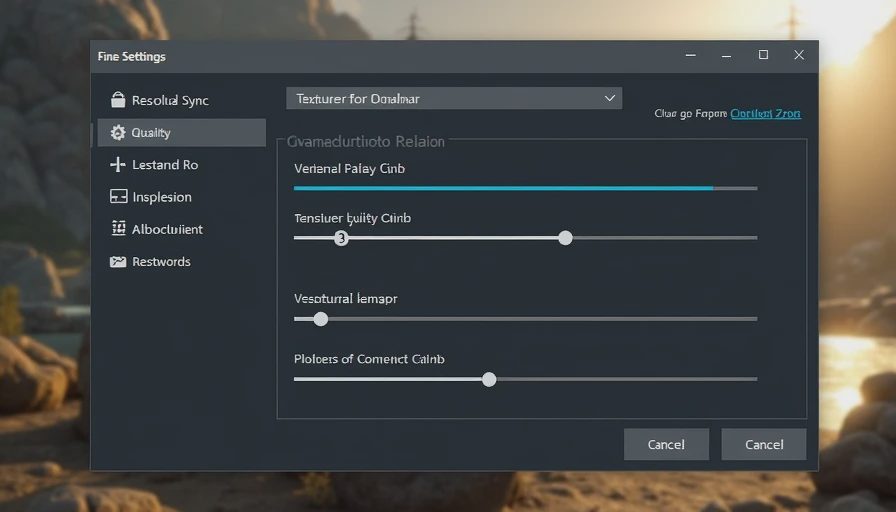
Rule 2: The settings menu is part of the review.
A good options screen lets me trade image quality for stability without needing a guide. A bad one hides the important toggles, forces heavy effects back on after every patch, or offers “Low / Medium / High / Ultra” with no real middle ground that actually helps. If I have to alt-tab to a wiki just to make the game playable on my hardware, the performance work is incomplete.
Rule 3: Controller and keyboard are not the same test.
Some games feel fine with a mouse and fall apart the moment you put a stick in your hand—input latency, camera acceleration, or UI that was clearly designed for a cursor. Performance reviews that only test mouse-and-keyboard are incomplete for anyone who plays on the couch after 9 p.m. I check both.
Rule 4: Thermals and power draw are not someone else’s problem.
If a game pushes my older GPU into sustained high power states just to hold 60, I notice. The room gets warmer. The power bill notices. The fans get louder. A well-optimized title respects the hardware envelope it claims to support. A poorly optimized one treats your electricity and your eardrums as free resources.
Rule 5: The first hour is not the whole story.
Launch performance and post-patch performance can be different animals. I note both. A game that ships rough but stabilizes within a couple of patches gets partial credit. A game that ships smooth and then gets heavier with every content drop loses it. The electric bill does not care about the developer’s roadmap.
These rules are not anti-ambition. They are anti-waste. A game can look excellent and still respect the machine running it. Plenty of titles prove that every year. The ones that don’t should stop borrowing the language of “next-gen” while delivering the experience of a tax on your patience and your utility bill.
When I write Frame Rate and Friction pieces, you will see these standards applied the same way every time: what hardware I used, what settings delivered stable play, where the frame times broke, and whether the game still felt worth the power it was drawing.
I am not chasing the highest number on an overlay. I am chasing the lowest amount of friction between me and the hours I actually have.
A game doesn’t need to be perfect. It needs to earn the hours—and it should not make the electric meter spin harder than necessary while it does it.



No notes yet — write the first.