
“Dozens of builds.”
“Nearly endless loadout combinations.”
“Play your way.”
These phrases appear on store pages and in patch notes with reliable frequency. Sometimes they describe a system that actually changes how the game feels in your hands. More often they describe the same core math wearing different cosmetic or numerical hats.
I care about the difference because only one of them earns the hours.
Real build variety
Real variety produces distinct decisions in the moment of play.
You choose a build and the game responds by changing what you look for in a fight, how you move, what resources you protect, and which risks become acceptable. Two players using different setups should feel like they are solving overlapping problems with different tools, not simply dealing damage through slightly different formulas. The skill ceiling stays high because reading the situation still matters more than the spreadsheet that produced the loadout.
Signs I look for:
Different builds create different priorities in the same encounter.
Strengths and weaknesses are visible in play, not only in a DPS overlay.
Swapping setups changes the rhythm of a session, not just the size of the numbers.
The system supports meaningful off-meta choices without making them feel like self-imposed handicaps.
When variety is real, theorycrafting stays interesting because the results show up in the hands, not only in a calculator.
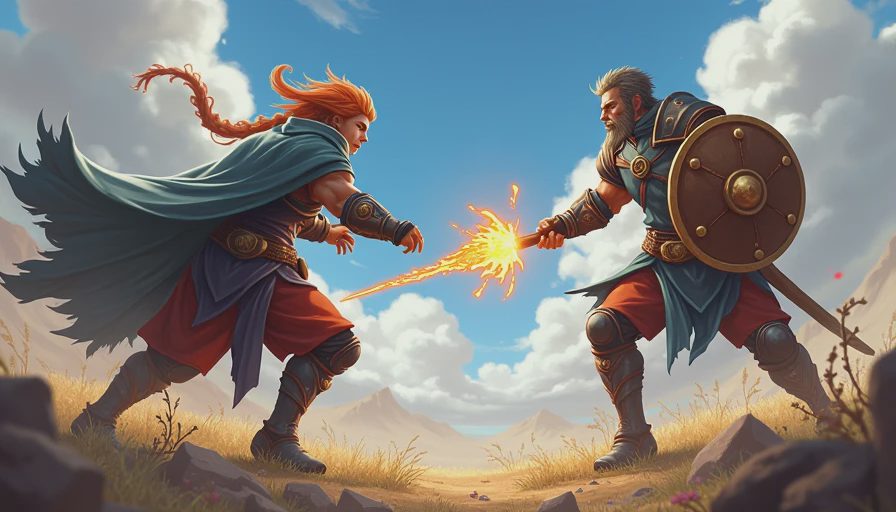
The same math in different hats
This version multiplies options on paper while keeping the actual play pattern narrow.
You can select different skills, different gear, different trees. After the selection screen, most paths still converge on the same rotation, the same positioning habits, and the same resource cycle. The numbers change. The verbs do not. What the game calls “build diversity” is often just parallel routes to a very small number of effective strategies.
Common tells:
Affix or skill choices that look unique until you realize they all feed the same damage or survivability formula.
Set bonuses and breakpoints that punish deviation more than they reward creativity.
A meta that collapses to two or three viable approaches within weeks of launch, while the UI continues to advertise dozens of options.
Inventory and planning time that grows faster than the number of genuinely different ways the game can feel.
This kind of system is not automatically bad. It can still deliver a satisfying power curve. It simply should not be sold as deep variety. It is numerical expansion. Those are different products.
Why the distinction matters for limited time
If I only have four to eight hours a week, I do not have the bandwidth to maintain six different spreadsheets so I can pretend the play patterns are distinct. I need the differences to show up inside a single session. When a game promises variety and delivers only parallel math, the planning overhead becomes pure friction. The hours go to maintenance instead of play.
Real variety respects that constraint by making the choices legible and the results tangible without requiring a second monitor full of guides. Fake variety increases the administrative load while leaving the actual experience mostly unchanged.
How I call it in practice
In System Breakdowns and Worth Your Weekend pieces I try to separate the two clearly. I will say when a game offers genuine alternative approaches and when the build screen is mostly offering different routes to the same loop. The first can justify a higher price and longer engagement. The second gets credited for the power fantasy it actually delivers, not the one the marketing language implies.
A game doesn’t need to be perfect. It needs to earn the hours. Build systems earn them when the choices change the play. When they only change the hats the math wears, they are spending the hours on paperwork.





No notes yet — write the first.