
Frame rate is not the only performance metric that matters.
There is also the performance of your attention. Every unnecessary icon, every bloated inventory screen, every menu that requires three clicks to do one thing is a small tax on the same limited resource you need for actual play. Over a session those taxes add up. Over a week they decide whether a game feels light enough to pick up at 9:30 p.m. or heavy enough to leave closed.
I have started treating interface friction as seriously as frame-time friction. Both decide whether the hours feel earned.
UI clutter
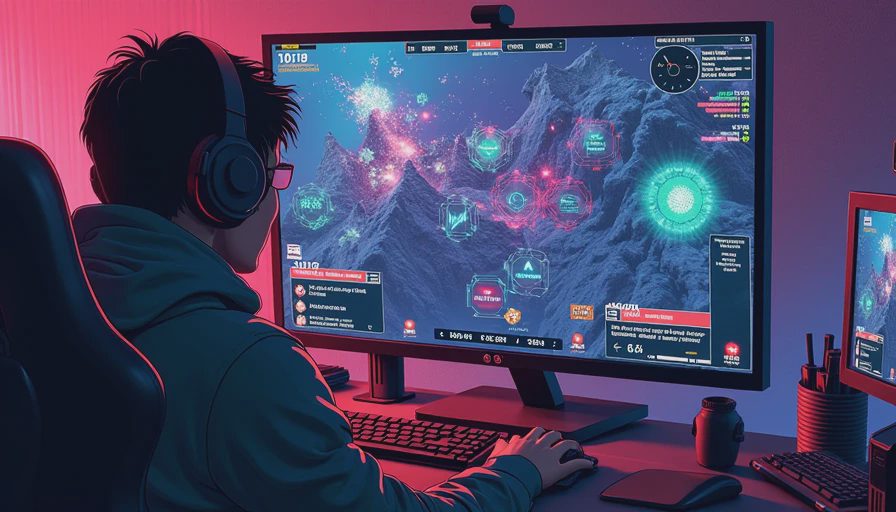
The screen fills up. Health bars, resource meters, ability cooldowns, quest trackers, minimap icons, damage numbers, buff lists, party frames, and the occasional timed event banner all compete for the same visual bandwidth. Some of it is necessary. A lot of it is default noise that the game never bothers to let you quiet down.
Good UI design gives you control. It lets you fade, scale, or hide elements that are not relevant to the current moment. Bad UI design assumes more information is always better and leaves you to parse the mess in real time. When I am already tired, that parsing cost comes directly out of the fun.
Inventory bloat
This is the most consistent attention thief in modern games.
Every material, every duplicate, every slightly different upgrade path ends up in a bag that needs regular sorting. Comparison tooltips grow longer. Salvage decisions multiply. What began as a loot fantasy turns into inventory administration. If the time spent managing items starts to approach the time spent using them, the loop has inverted. I am no longer playing a game that has an inventory. I am managing an inventory that sometimes lets me play a game.
I now note how long a typical inventory session lasts and whether the game gives me clean tools—bulk actions, smart filters, meaningful auto-sort, sensible stack limits—to keep that time short. Games that refuse to help are telling me my brainpower is free.

Other common drains
Menus that require cursor precision on controller or bury common actions behind extra layers.
Quest logs that list tasks without clear priority or location context.
Skill and crafting screens that present dozens of options before the player has any basis for evaluating them.
Persistent on-screen prompts that remain long after they have stopped being useful.
Systems that demand attention during downtime that should otherwise be recovery.
Each of these is small. Together they raise the cognitive cost of every session. For a player with short windows and a already-full mental tab, that cost is often the difference between “I’ll play for a bit” and “I’ll just watch something instead.”
What I look for instead
Interfaces that default to calm and let complexity be summoned when needed. Inventories that respect the player’s time with bulk management and clear signals about what actually matters. Menus that can be driven cleanly by stick and buttons without feeling like a compromise. Games that understand the screen and the bag are part of performance, not decorations layered on top of it.
When I write Frame Rate and Friction pieces, these issues get the same weight as stutter or low FPS. A game that runs at a locked 60 but constantly makes me fight the UI is still failing the friction test. The brain is hardware too. It has limits. It is allowed to be respected.
A game doesn’t need to be perfect. It needs to earn the hours. Wasting brainpower on clutter and bloat is one of the quieter ways it can fail to do so.


No notes yet — write the first.